How do I choose the right startup idea?
Choosing the right startup idea isn't about finding the most innovative concept. It's about picking a problem worth solving, one you understand, can validate quickly, and will still care about a year from now. Here's a simple framework we use to evaluate startup ideas before writing the first line of code.
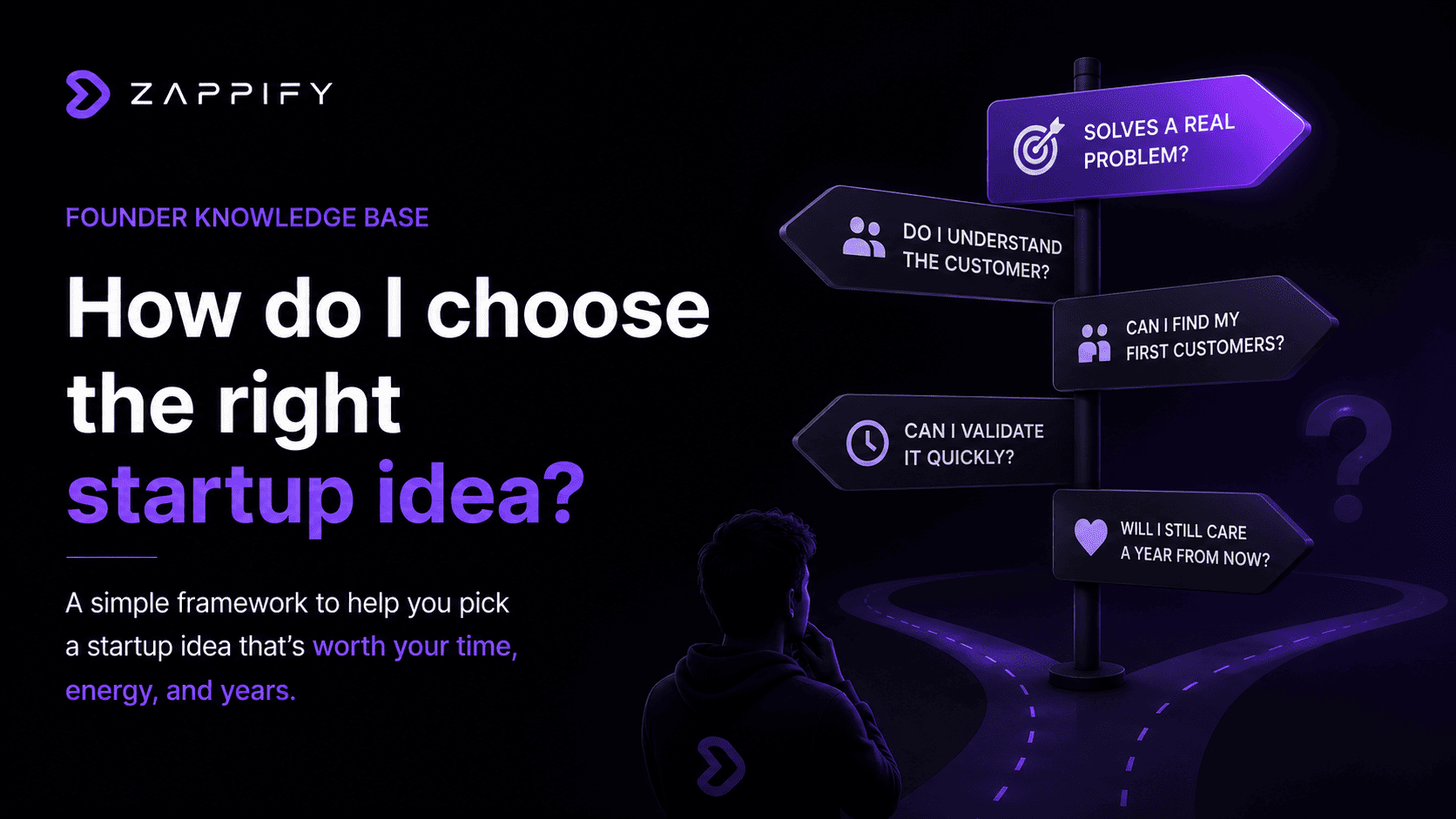
Short Answer Choosing a startup idea isn't about asking, "Which one can become a billion dollar company?" It's about asking, "Which problem am I willing to spend the next few years solving?" That one question can save you months of building the wrong thing.
Why I think this? One thing I've realised is that our brains are terrible at judging startup ideas. The more time you spend thinking about an idea, the more attached you become to it. You start connecting dots that don't actually exist. You convince yourself that everyone must have this problem. You assume people will happily pay for it. By the end of the week, you've already imagined the logo, the product, the launch, and maybe even your TechCrunch feature. The problem is, none of that means the market agrees with you. The market doesn't care how excited you are. It only cares whether you're solving a problem people actually want solved. That's why whenever someone asks me, "Which idea should I build?" I almost never answer immediately. Instead, I start asking questions. Does this problem happen every week or just once a year? Who is frustrated enough to pay for a solution? How would you find your first ten customers? Would you still enjoy solving this problem two years from now? The answers usually tell us more than the idea itself. One lesson stands out more than anything else. We've worked with founders who had genuine problems worth solving. We helped them refine the idea, challenge their assumptions, and build a product we were genuinely proud of. It should have launched, but It didn't. Not because the product wasn't good. The founders simply stopped caring. They had experienced the problem once or twice, but they didn't want to dedicate the next five years of their lives to solving it. That's when I realised something. You aren't choosing a startup idea. You're choosing the problem you'll wake up thinking about every day for the next few years. That's a much bigger decision. If it were my startup I wouldn't sit in a room trying to think of the "perfect" idea. I'd pick three or four ideas. I'd speak to potential customers. I'd see which problem people actually cared about. And then I'd ask myself one final question. If this startup took five years to succeed, would I still enjoy working on it? If the answer is yes, I'd build it. If the answer is no, I'd keep looking. Because building an MVP takes a few weeks. Building a company takes years.
FAQs
I have three startup ideas. How do I choose one?
I'd compare them against the same simple question, "Which one can I learn the most about in the next 30 days?" Founders often choose the most exciting idea instead of the easiest one to test. I'd always pick the idea that gets me closer to real customers and real conversations the fastest.
Can I work on two startup ideas at the same time?
I'd strongly avoid it. Two ideas usually become two half finished projects. Early stage founders don't fail because they picked the wrong idea. They fail because they split their attention. Give one idea your full focus for a fixed period before deciding whether it's worth continuing.
Should I choose the startup idea I'm most passionate about?
Not necessarily. Passion helps you stay consistent, but it doesn't create demand. I'd rather work on a problem that keeps showing up in real conversations than an idea I simply enjoy thinking about. Passion often grows after you see customers getting value, not before.
What if I pick the wrong startup idea?
I'd assume you'll change your mind at least once, and that's completely normal. Choosing an idea isn't a lifetime commitment. It's simply deciding what to learn next. The biggest mistake isn't choosing the wrong idea. It's spending months trying to find the perfect one before you've learned anything from the market.
How long should I spend choosing a startup idea?
I'd give yourself a clear deadline, not an endless search. If you've spent weeks comparing ideas but haven't spoken to a single potential customer, you're probably overthinking it. Pick the strongest option you have today, then start learning from real people instead of trying to think your way to certainty.