How do I get my first customers?
Your first customer probably won't find you. Go find one person who has the problem, talk to them, show them the product, and ask for the sale.
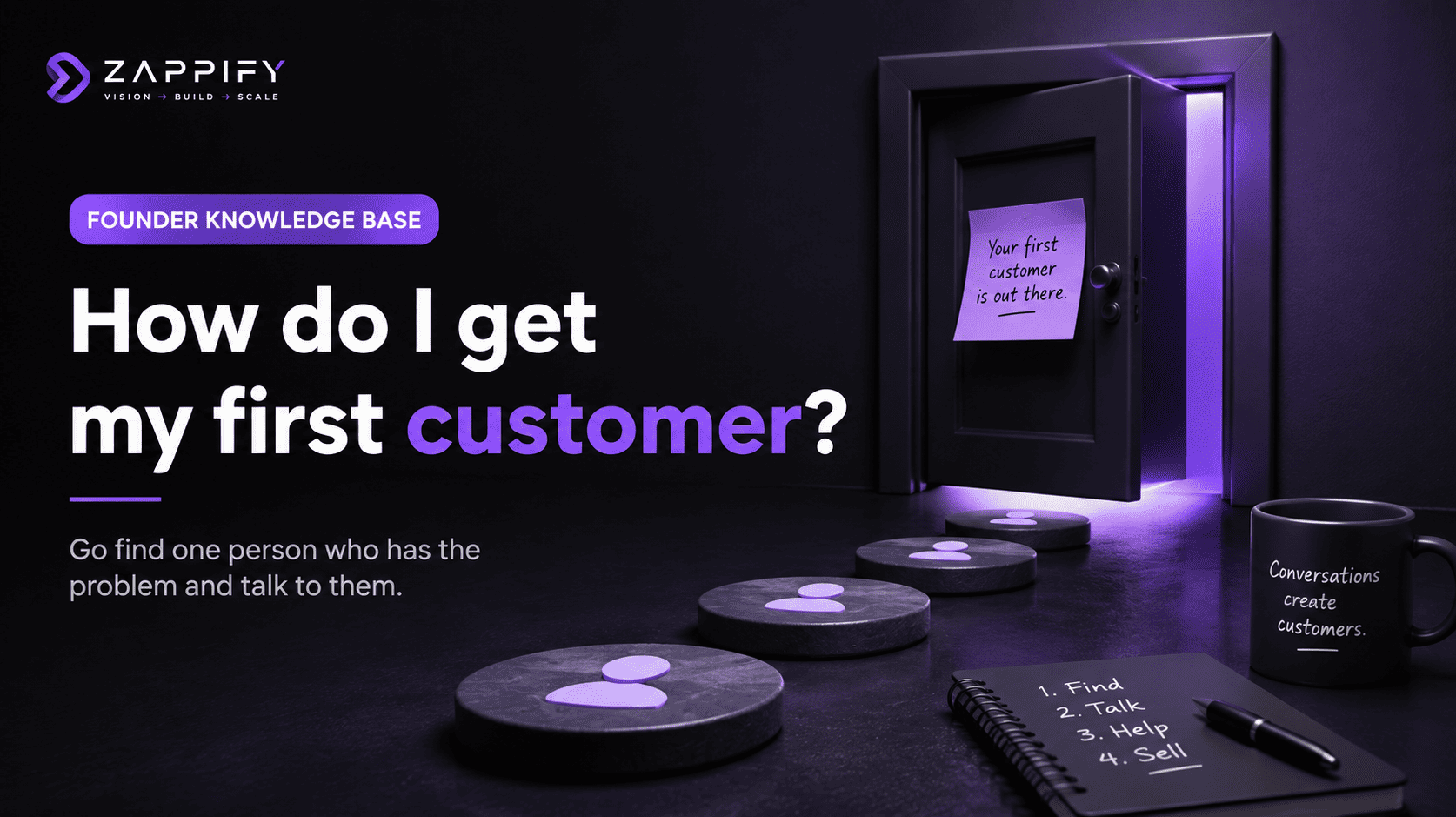
Short Answer Don't launch your product and wait for someone to find it. Go find your first customer yourself. Your first customer probably won't come from one perfect LinkedIn post or a beautiful website. They'll probably come from a conversation. At this stage, you don't need a marketing machine. You need one person who has the problem badly enough to pay you to fix it.
Why I Think This I've seen founders spend months building an MVP and then think, "Once we launch, people will start using it." I wish that were true. It usually isn't. You put the product live. You post on LinkedIn. Maybe a few friends like the post. And then... nothing. That's the bitter part of building a startup that nobody really tells you. Nobody is waiting for your product to launch. People already have busy lives. They already have tools. They already have ways of doing things. Your new product has to give them a reason to stop what they're doing and try something they've never heard of. So if I were launching a product tomorrow, I wouldn't sit back and wait for the launch to bring customers. I'd go looking for them. I'd think about the exact person who has the problem I'm solving. Then I'd find those people. I'd message them. I'd ask for introductions. I'd join the communities where they already spend time. I'd show them what I built. And I'd ask for the sale. Not because this is some perfect sales strategy. Because at the beginning, nobody knows you exist. Your first customer is unlikely to magically appear because your website is live. You have to go and get that first conversation. And honestly, I'd rather have five real conversations with people who have the problem than 5,000 people scrolling past a launch post. This is also why I would not start with ads. You don't know enough yet. You don't know which customer cares most. You don't know which part of the product makes them say, "I need this." You don't know what stops them from buying. Talking to people gives you those answers much faster. It's something I think founders underestimate. You don't need to know everything before customer one. Customer one is part of how you find out what you don't know. Once someone actually cares, things get easier. You can learn why they cared. You can understand what made them buy. You can ask who else has the same problem. That's how customer two can start looking a little more like customer one. Your launch is not the moment customers arrive. It's the moment you start going after them. If I Were Starting From Scratch... I'd forget about getting 100 customers. I'd first try to get one. I'd write down exactly who I think has the problem. Then I'd find people who look like that person. I'd start conversations. I'd show them the product. I'd ask what they think. And when the product genuinely solves their problem, I'd ask them to pay. If they say no, I'd want to know why. If they say yes, I'd want to know why. Then I'd find another person like them. I wouldn't spend months building a sales funnel. I wouldn't run ads yet. I wouldn't worry about making the launch look impressive. I'd focus on getting one person to say, "Yes, I need this." That is a much better starting point. A Small Zappify Principle Don't try to make your launch look successful. Make your first customer successful. That person will teach you more about your product than 1,000 random visitors.
FAQs
What will I learn from “How do I get my first customers?”?
Your first customer probably won't find you. Go find one person who has the problem, talk to them, show them the product, and ask for the sale.
Who is this Getting Customers guide for?
Founders, business owners, and product teams making decisions about getting customers.