How do I know if my MVP is ready to launch?
Your MVP does not need to be perfect. It needs to work well enough for real users to teach you what to build next.
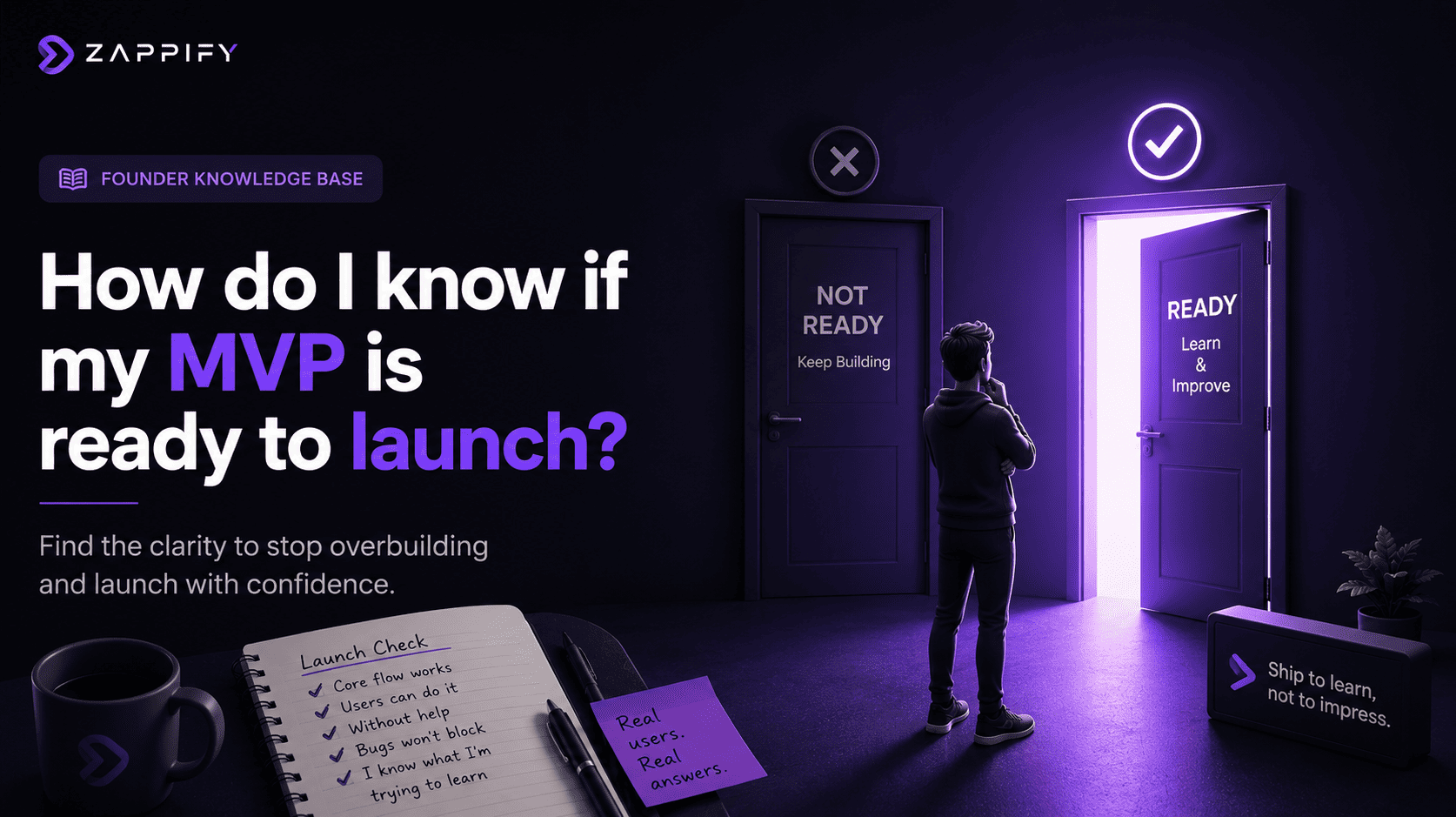
Short Answer I'd actually launch sooner than most founders think. Your MVP does not need to be perfect. It needs to do just one important thing well enough that a real person can use it without you standing beside them. The harder part is knowing whether something is genuinely missing, or whether you're just finding reasons to keep building. If the main user journey works, I'd put it in front of real users.
Why I Think This I've seen founders spend weeks getting ready to launch. One more feature. One more design change. One more edge case. One more thing they want to fix. And every time they get close, there is another reason not to launch. I understand why. Once you launch, you can't hide behind the product anymore. Someone might use it and say they don't like it. Someone might not use it at all. That can feel much worse than finding another feature to build. But that's also the point of an MVP. You are supposed to find out what happens when real people use it. I think there are four things I'd check before launching. 1. Can someone complete the main job? Forget all the features for a minute. Take the one thing your product exists to do. Can a real user complete that from beginning to end? If you're building a marketplace, can someone actually find and book something? If you're building an internal tool, can someone actually finish the task it was built to simplify? If yes, you're much closer than you think. 2. Can they do it without you? This is the test I care about most. Give the product to someone who has never seen it. Don't explain every button. Don't tell them where to click. Just tell them what you're trying to help them do, and then watch. If they get stuck because something is genuinely broken, fix it. If they get stuck because the experience is confusing, fix that too. But if you have to sit beside every user and tell them what to do, I'd wait. The product doesn't need to be beautiful. It needs to make sense. 3. Do you know what you're trying to learn? This is where I think founders sometimes get launch wrong. Launching isn't the finish line. You're launching because you want an answer. Maybe you want to know whether people will pay. Maybe you want to know whether they come back. Maybe you want to know whether they can complete the main workflow without help. Maybe you simply want to know whether anyone cares. Write that question down before you launch. Because if you don't know what you're trying to learn, you can get 100 users and still have no idea what happened. 4. Is the thing you're worried about actually a launch blocker? This is the question I'd ask whenever I hear: "We're almost ready. We just need to fix a few things." I'd make two lists. Things that can stop someone from using the product. Fix these. Things that would make the product nicer. Probably wait. A payment failure is a launch blocker. A broken signup flow is a launch blocker. A user being unable to complete the main task is a launch blocker. Changing the button colour probably isn't. Adding the fifth feature probably isn't. Making the dashboard look a little better probably isn't. That distinction can save you months. What I'd Do Before Launching I wouldn't go straight from development to a huge public launch. I'd do a small launch first. Give it to five or ten people who actually have the problem. Watch them use it. Don't tell them how to use it. Ask them what they expected to happen. See where they get stuck. Fix the things that genuinely stop them. Then give it to another few people. If the same core journey keeps working, I'd launch properly. This is also why I don't think an MVP needs to look finished. I've worked with founders where the first version was deliberately simple. The goal was not to impress everyone. It was to get the product into someone's hands quickly enough to learn. And sometimes the biggest learning is uncomfortable. Nobody uses it. That's not a failed launch. That's an answer. You can change the product. You can change the customer. You can change the pricing. You can even decide not to build it. I'd much rather know that after two months than after another year of development. If I Were Starting From Scratch... I'd ask myself four questions before launching: Can my first user complete the main thing? Can they do it without me explaining every step? Is there anything genuinely broken that would stop them? Do I know what I want to learn from the first users? If I can answer yes to all four, I'd launch. Not because the product is finished. Because I have reached the point where more building will teach me less than real users will. That's the point I'd stop hiding behind the next feature and put the product in front of people.
FAQs
Can I launch my MVP before all the features are finished?
Yes, I would launch before all the features are finished. If the main thing your product is supposed to do works, I'd rather put it in front of users than spend another month adding features they may never need. Your first users should help decide what comes next. If you already know what every future feature should be, you probably haven't learned enough from users yet.
How many people should test my MVP before I launch?
I'd start with five to ten real users, not hundreds. The goal is not to prove that everyone loves the product. It's to watch a few people use it without your help and find where they get stuck. If five people all struggle with the same part, that's useful information. You can fix that before putting the product in front of more people.
Should I launch my MVP if it still has bugs?
Yes, if the bugs are small and don't stop the main user journey. I wouldn't launch if people can't sign up, pay, complete the main task, or get the result your product promises. But a small visual bug or an edge case that almost nobody will hit shouldn't keep you inside development for another month. Fix what blocks learning, then launch.
What should I do if nobody uses my MVP after launch?
Don't immediately build more features. First find out why nobody used it. Talk to the people you expected to use it and ask what stopped them. Maybe they don't care about the problem, maybe they don't understand the product, or maybe you reached the wrong people. No users is a reason to investigate, not a reason to automatically add another feature.
Does my MVP need to look professional before I launch it?
No, but it needs to feel clear and trustworthy. I wouldn't spend weeks making an MVP look like a finished product. But if users cannot understand what to do, the design is getting in the way. Good UX matters even in a simple MVP. You don't need expensive design work everywhere. You need a clear user journey that makes the main task easy to complete.
How long should I test my MVP before launching it?
I wouldn't set a fixed number of weeks. I'd test until I know the main user journey works with people who did not build the product. Five users may reveal enough to fix the biggest problems. After that, I'd rather launch and keep learning than run a private test for three months. The point of testing is to remove launch blockers, not delay the launch.