How much should I budget for my MVP?
A focused software MVP usually needs around $3,000 to $5,000. The goal isn't to build everything. It's to spend enough to launch and learn.
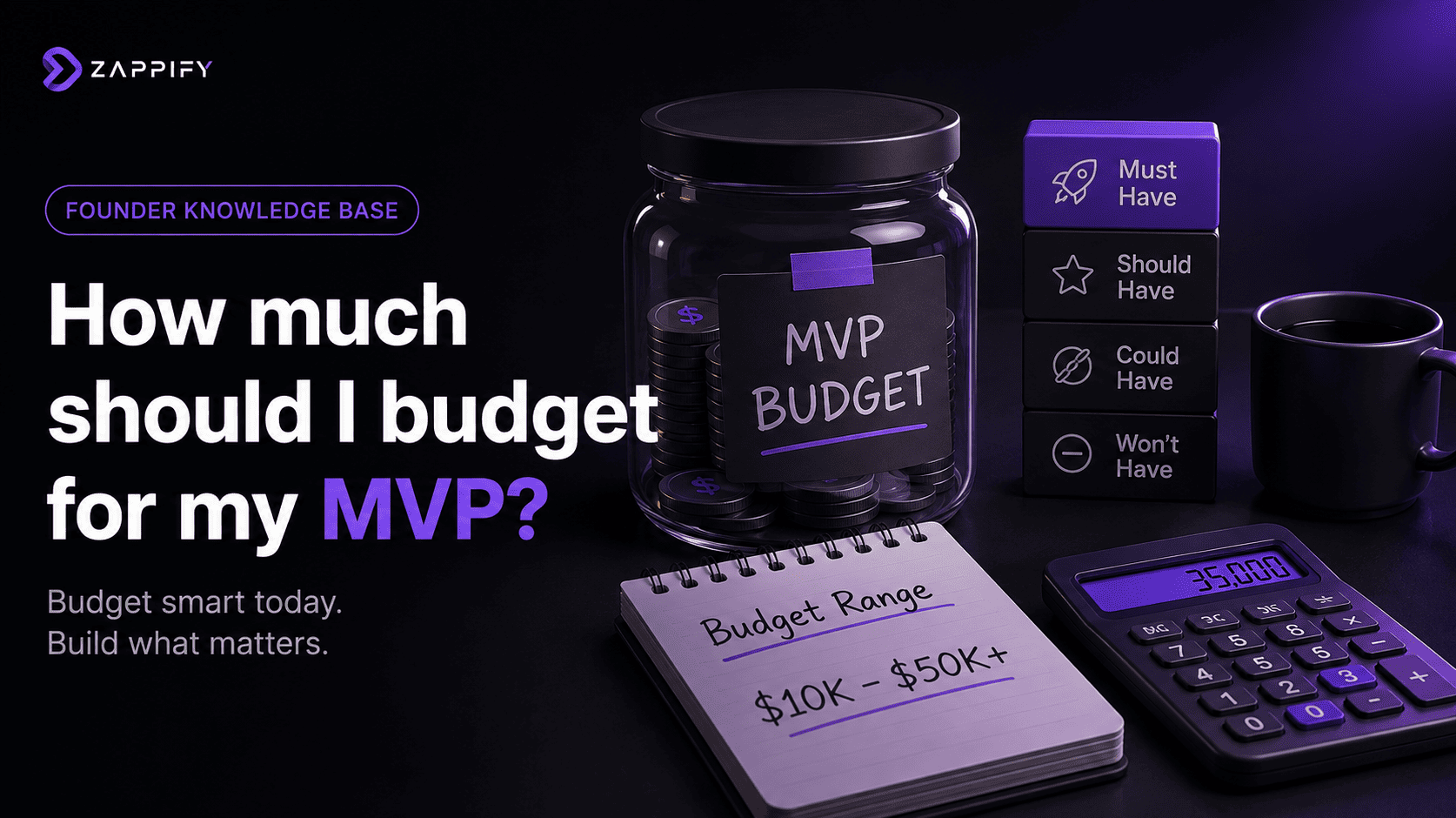
Short Answer For a focused software MVP, I'd usually budget $3,000 to $5,000 . You can spend less. You can also spend much more. But I wouldn't start by asking, "How much software can I build with $5,000?" I'd ask: "What do I need to learn from my MVP?" Your first product should give you enough to launch, get real users, and learn what to build next. You don't need to build the whole company on Day 1.
Why I Think This I've noticed that founders often think about MVP budgets in terms of features. They make a list. Login Dashboard Payments Notifications Admin panel AI Mobile app Then they ask someone to price it. I think there's a better way to look at it. You're not spending $3,000 to $5,000 on software. You're spending it to find out whether your business has something worth building further. That changes how I'd spend the money. If I were building a marketplace, I wouldn't need every feature a mature marketplace has. I'd need enough for someone to actually use the marketplace. That's why two founders can have completely different MVP budgets. One might need $2,000. Another might need $8,000. The important question is not whether the number is high or low. It's whether the money gets you to a useful learning point. Your budget should have an end point This is another thing I'd be careful about. An MVP should have a point where you can say: "We're done. Let's put this in front of people." If development keeps going because there is always one more feature to add, your budget becomes meaningless. We once worked with a founder who had already spent nearly two and a half years building a learning platform with another developer. When he came to us, he wanted to start again. We agreed on a focused first version and built it. Near the end, he wanted to add several completely different experiences for different age groups, new reports, AI explanations, AI generated images and graphs, more gamification and much more. We could have kept building. He was willing to pay. But we knew the product was moving further away from launch. So we pushed back. Eventually, we decided to walk away from the project. We could have made more money by continuing. We chose not to. I'd rather help a founder launch a $4,000 MVP than keep taking money to build a $20,000 product that never gets launched. That's how I'd think about your MVP budget too. Spend enough to get to the first real answer. Then let the business tell you where the next dollar should go. If I Were Starting From Scratch... I'd keep $3,000 to $5,000 aside for the first version. Then I'd decide what I want that money to achieve. Maybe it's getting the first paying customer. Maybe it's getting the first 50 users. Maybe it's proving that people will use a workflow every week. Whatever that answer is, I'd build towards that. I wouldn't try to make the product complete. I wouldn't spend the entire budget before launch either. I'd keep some money aside for what I learn afterwards. Because the most useful feedback usually comes after someone actually uses the product. My goal wouldn't be to build the most impressive MVP for $5,000. It would be to get the most useful learning from those $5,000.
FAQs
Why do MVP development quotes vary so much?
Because different teams often understand the word "MVP" very differently. One team might quote for a working first version, while another includes much more planning, design, testing or development work. I wouldn't compare the numbers alone. I'd ask each team to explain exactly what is included and what would cause the final cost to increase.
How do I know if an MVP quote is too high?
Don't judge an MVP quote only by the final number. Ask what you're getting for it, how the team arrived at the estimate, and what would make the price go up. A $3,000 quote isn't cheaper if it becomes $8,000 through constant additions. I'd rather pay a clear $5,000 than start with a cheap quote I can't trust.
What should I ask an agency before agreeing to an MVP price?
I'd ask three things: - What exactly is included? - What happens if I change something? - What can increase the price? I also want to know who will make product decisions when something is unclear. A good team should make the budget easy to understand before development starts, not explain the extra costs after you've already committed.
What happens if my MVP requirements change after development starts?
Some changes are normal, but major changes should affect the budget and timeline. I'd expect a good team to tell you this clearly rather than quietly absorbing everything. I've actually walked away from a project when the product kept growing far beyond the agreed MVP because I didn't think taking more money to keep building was helping the founder get closer to launch.
Should I get multiple quotes before building my MVP?
Yes, but I wouldn't collect ten quotes. I'd speak to two or three teams and give them the same information. Then compare how they think about the product, not just what they charge. If one team asks thoughtful questions about your users and another immediately sends you a feature list and price, that difference is worth paying attention to.
Should I get my MVP designed before asking for a development quote?
Not necessarily. I'd get the important user journeys mapped first, then work with the development team to understand what needs to be designed and built. You don't need to spend thousands on polished screens before you know what you're building. A good team should be able to help you turn the idea into a clear scope before development starts.