How should I price my product?
Not sure what to charge for your product? Start with what the problem costs your customer today, then test a simple price with real buyers.
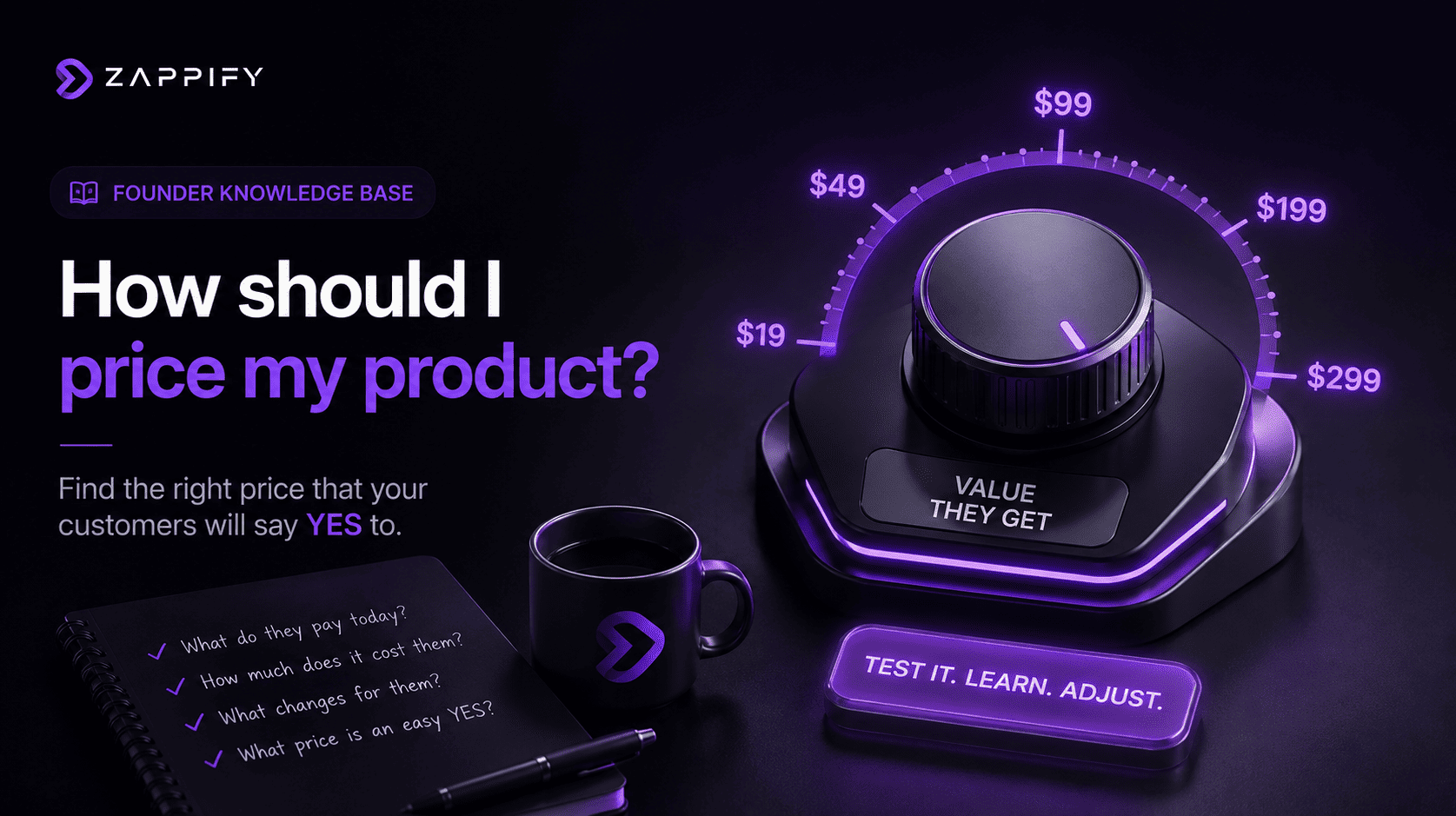
Short Answer I would not spend weeks trying to find the perfect price. Your first price is a test , not a permanent decision. Start by understanding what the customer is paying today, how much the problem is costing them, and what your product changes for them. Then pick a simple number and put it in front of real customers. Your first price does not need to be right. It needs to be testable.
Why I Think This I see founders make pricing much harder than it needs to be. They look at five competitors. One charges $29. Another charges $49. Another charges $99. Then they ask me, "Should I charge $39 or $49?" I don't think that's the real question. The first question I'd ask is: 1. "What is this customer paying today to deal with the problem?" Maybe they are paying an employee to do something manually. Maybe they are using three different tools. Maybe they are losing sales because something takes too long. Maybe the founder is spending ten hours every week doing the work themselves. That gives you a much better starting point than your competitor's pricing page. Then I'd ask: 2. "How much is this problem costing them today?" This is where pricing starts to become clearer. Maybe your product saves a business $500 every month. Maybe it saves someone five hours of work every week. Maybe it helps a sales team stop losing leads. The exact number doesn't have to be perfect. You just need to understand whether you're fixing a small annoyance or something that is already costing the customer real money or time. The more expensive the problem, the more room you usually have to charge for fixing it. Then comes the part that matters most. 3. "Will someone actually pay for my product?" This is something you cannot figure out by thinking about it. If you ask someone, "Would you pay $50 for this?", they can easily say yes, as there is no risk to them. But if you show them the product and say "It's $50 a month.", now they have to make a real decision. They might say yes. They might say no. They might ask why it costs $50. All of those answers are useful. You're not trying to hear "yes". You're trying to learn whether the price makes sense to the person buying. This is also why I don't think your first product needs five pricing plans. I've seen founders want Free, Starter, Pro, Business, Enterprise, monthly billing, annual billing, usage based pricing, credits, add ons, and discounts before they have their first customer. I'd keep it simple. One customer. One clear problem. One clear price. You can make the pricing more complex once customers give you a reason to. So if you are stuck between $49 and $59, I'd stop thinking about it. Pick one. Show it to people. Learn. That's how I'd price a new product. If I Were Starting From Scratch... I'd take 30 minutes and write down five things. What does my customer use today? What does that cost them in money or time? How much is this problem costing them today? What changes for them after using my product? What price would make sense for that change? Then I'd choose one price. I'd talk to five potential customers and show them the actual product and the actual price. I would not ask them what they think I should charge. I'd watch what happens when they have to make a real decision. If nobody wants to pay, I have something to learn. If everyone says yes immediately, I have something else to learn. Either way, I now have information. I'd rather have a real answer from five customers than a perfect pricing model sitting in a spreadsheet.
FAQs
Should I copy my competitors' pricing?
Use competitor pricing as a reference, not as your answer. Look at what similar products charge so you understand the range. Then ask whether your customer, problem, and value are actually similar. A competitor charging $99 does not mean you should charge $99. Your job is to decide what makes sense for your customer.
How do I know what customers are actually willing to pay?
Don't ask customers to invent a price for you. Ask what they use today, what it costs them, how often the problem happens, and what happens if they don't fix it. Then show them your product and your actual price. Their reaction to a real price will tell you much more than saying they would "probably pay."
Should I charge my first customers?
Yes, if the product already solves a real problem. You don't need to charge your full long term price, but I would try to get some money from the beginning. A person saying they like your product is useful. A person taking out their card is much stronger evidence that the problem matters.
Should I offer my product for free at first?
I would only make it free if free users help you learn or grow in a useful way. Free signups can make your numbers look good without telling you whether people care enough to pay. If the product solves a painful business problem, I would try to get a few customers to pay early rather than collecting hundreds of free users.
How do I know if my product is too expensive?
If the right customers keep saying no because the price is too high, you have a signal worth investigating. But don't lower the price immediately. First check whether they understand what they are getting and whether the problem is painful enough. A high price can be correct when the product solves an expensive problem.
Should I change my price after I launch?
Yes, I would expect your price to change. Your first price is based on limited information. After talking to real customers, you may discover that some customers get much more value than others, or that people care about something you did not expect. Change the price as you learn. Don't treat your first pricing page as permanent.