How do I know if my startup idea is worth building?
A good startup idea isn't one that sounds exciting. It's one that solves a problem people genuinely want fixed. Here's how I'd decide whether an idea is worth spending the next few years of my life on.
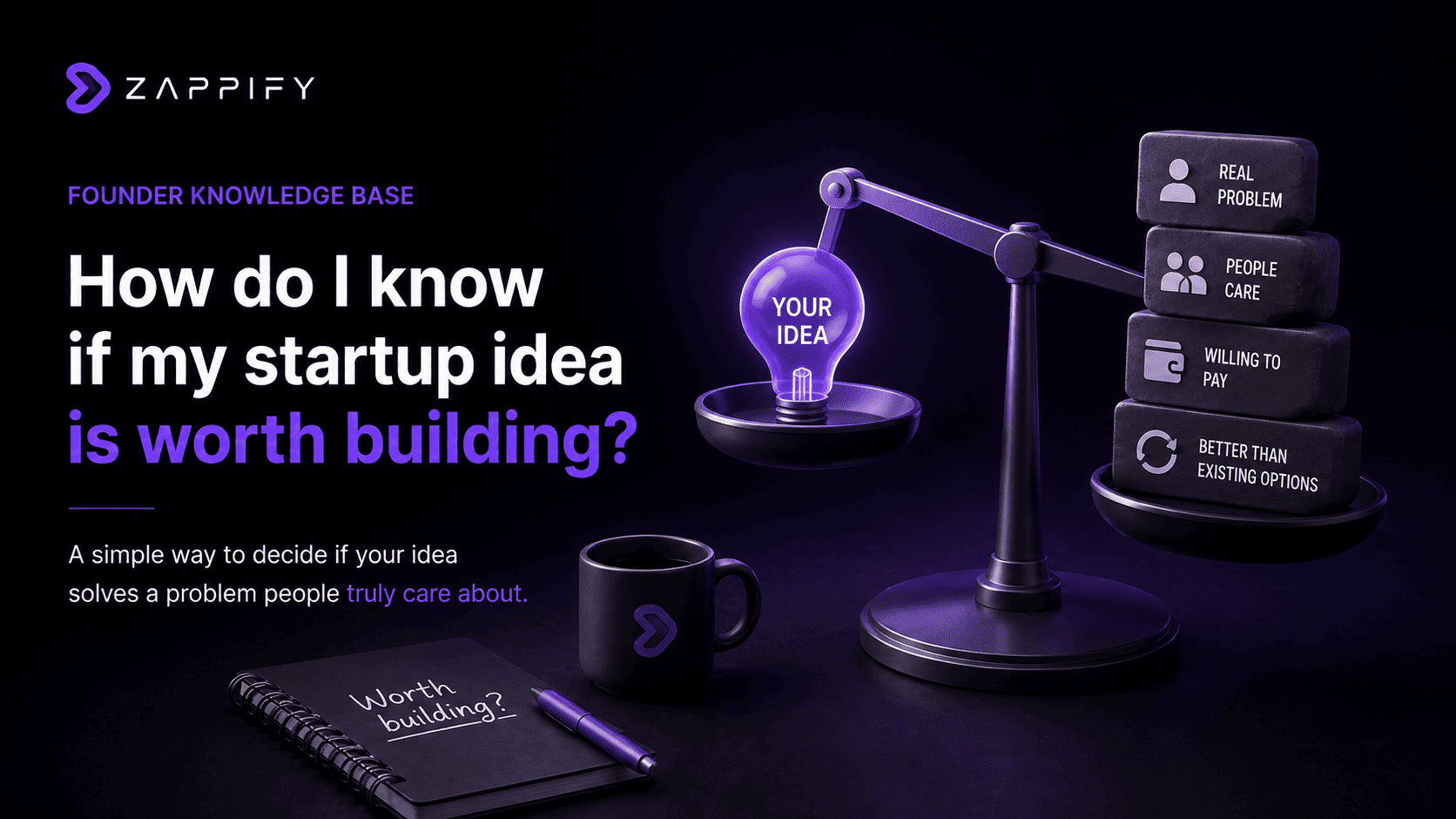
Short Answer Ask yourself one simple question. If this product didn't exist, would people actually miss it? Not because it's cool. Not because AI can build it. Not because your friends said it's a good idea. Only because it solves a problem people genuinely care about. If the answer is yes, you're onto something.
Why I think this? I've met hundreds of people who wanted to build a startup. Almost all of them believed their idea was good. Very few had actually spoken to the people they were building for. That's the biggest mistake I see. People fall in love with the idea before they find out whether anyone else cares. One such example from our experience: One founder was a radiology resident, who came to us with an idea. She wasn't trying to build a startup. She was simply tired of seeing patients arrive unprepared for scans. Some hadn't fasted. Some forgot their reports. Some didn't know they needed a full bladder. One patient being unprepared delayed everyone else. She didn't need market research to know this was a real problem. She lived it every single day. That became RTReady . Looking back, I've noticed something. The founders who build good products rarely start by asking, "Is this a good startup idea?" Instead, they ask, "Is this a problem people really want fixed?" That's a much better question. Because ideas change. Problems usually don't. If I were starting from scratch... I wouldn't ask my friends whether they liked my idea. I'd go and find ten people who have the problem. Then I'd ask them three simple questions. "How do you solve this today?" "What's the most annoying part?" "If this problem disappeared tomorrow, would it actually make your life easier?" If people don't care, I'd move on. If every conversation makes me more excited, I'd keep digging. I don't think you need hundreds of interviews. You just need enough conversations to know you're solving something people genuinely care about.
FAQs
How can I tell if people really need my product?
I'd stop talking about the product and start talking about the problem. If people immediately tell you stories about how they deal with it today, you're onto something. If you have to convince them the problem exists, I'd be careful. Real problems don't need a sales pitch. People are usually happy to complain about them.
What if nobody wants my startup idea?
I'd treat that as useful information, not failure. It's much cheaper to learn this before you spend months building. Sometimes the idea needs to change. Sometimes the problem isn't important enough. Either way, you've saved yourself time. The goal isn't to prove you're right. It's to discover what's actually worth building.
How many people should I talk to before I start building?
I'd look for patterns, not a magic number. If ten people describe the same problem in almost the same way, that's a much stronger signal than fifty polite conversations with no common theme. Stop counting interviews and start listening for repeated frustrations. That's usually where the best products begin.
Should I ask my friends and family if my startup idea is good?
I'd avoid relying on them. Most friends and family want to encourage you, not disappoint you. They'll often tell you it's a great idea because they care about you. The only opinions I'd trust are from people who genuinely have the problem you're trying to solve.
What if people already solve this problem another way?
I'd see that as a positive sign. Workarounds usually mean the problem is real. People using spreadsheets, WhatsApp groups, sticky notes, or multiple apps are already investing time to solve it. Instead of asking whether a solution exists, ask why people are still looking for a better one.