Should I find a co-founder?
A co-founder can make your startup much stronger, or make your life much harder. Here's how I'd decide whether you actually need one.
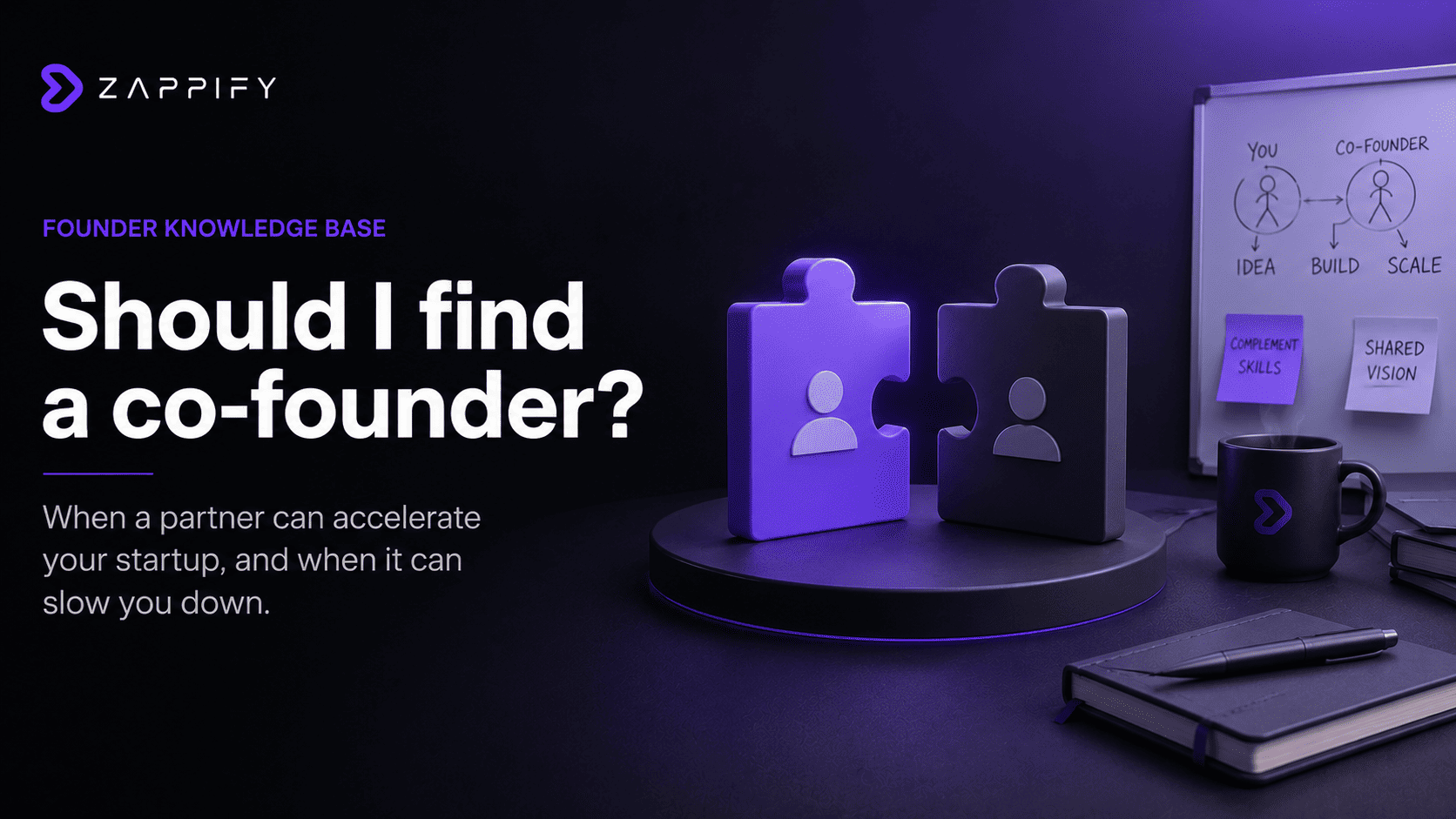
Short Answer Don't find a co-founder because everyone says you need one. Find one because you genuinely work better together. I'd rather build alone than build with the wrong person. The wrong co-founder can slow your startup down far more than having no co-founder at all.
Why I think this? One thing I've noticed is that first time founders worry too much about finding a co-founder. They think, "Investors like teams." "I can't do everything myself." "Every successful startup has two founders." Maybe. But I've also seen partnerships fall apart before the product even launched. And that's much harder to recover from than building alone. One founder we worked with had an idea for a product in the education space. He almost brought in a friend simply because he thought he needed a technical co-founder. Before making that decision, we asked him a simple question. "If this person wasn't your friend, would you still choose them?" The answer was no. He decided to build with an agency instead. Today, he's still building the product. More importantly, he still has his friendship. I've also seen the opposite. When Aayush and I started Zappify, we already knew how each of us worked. We had solved problems together before. We trusted each other. More importantly, we enjoyed working together. That made the difficult days much easier. The work was split naturally. One of us never had to wonder whether the other would show up. Looking back, I don't think the biggest benefit of having a co-founder was sharing the work. It was sharing the weight. Building a startup can be lonely. Having someone who genuinely cares as much as you do can make a huge difference. But only if it's the right person. I've noticed something else too. The best co-founders don't complete your skill set. They complete your mindset. Skills can be hired later. Trust is much harder to build. That's why I'd never rush this decision. A bad hire can be replaced. A bad co-founder usually can't. If I were starting from scratch... I wouldn't go looking for a co-founder on LinkedIn or at networking events. I'd first start building. I'd talk to customers. I'd build the MVP. I'd see who naturally kept showing up. Who challenged my thinking. Who cared about the problem as much as I did. If someone like that already existed in my life, I'd explore building together. If not, I'd happily build alone until the right person came along. I'd never give away half my company just because I felt I was supposed to have a co-founder.
FAQs
Can I start a startup alone?
Yes, you can start a startup alone, and I would rather do that than bring in the wrong cofounder. You can hire for skills you don't have, use outside help, and learn what you need along the way. A cofounder should make the company stronger, not simply make you feel less alone.
How do I find a cofounder for my startup?
I'd start with people I've already worked with before, not random profiles on a cofounder website. Someone who has seen how you handle pressure is much easier to judge than a stranger with an impressive profile. If nobody fits, startup communities and cofounder matching platforms can help, but I'd still work together before making anything official.
How do I know if someone is a good cofounder?
I'd work with them before giving them equity. Build something small together, have difficult conversations, make a few decisions where you disagree, and see whether they actually show up. A good cofounder isn't simply someone you like. It's someone you can trust when the company is under pressure and you strongly disagree about what to do next.
Should I choose my friend as my cofounder?
Only if you'd choose them even if you weren't friends. Friendship can make the relationship easier, but it can also make hard conversations much harder. I'd ask whether you trust their work ethic, judgment, and commitment, not just whether you get along. Your friendship should survive the business, rather than being the reason you start the business together.
Do I need a technical cofounder if I can't code?
No, not automatically. Not knowing how to code doesn't mean you need to give away half the company to someone who can. First figure out what you actually need to build and whether you can use a developer, agency, or modern development tools instead. A technical cofounder makes sense when you genuinely need a long term partner for the technical side.
Should I wait for a cofounder before building my startup?
No, I'd start without one unless the business genuinely cannot move forward without that person. Building first also gives you something real to show a potential cofounder. They can see the product, the customer problem, and the progress you've already made. You may even discover that the skill you thought you needed can simply be hired.
How should cofounders split equity?
I'd avoid automatically splitting the company 50 50 just because you're cofounders. The split should reflect what each person is bringing, their commitment, when they are joining, and what they will be responsible for. More importantly, agree on ownership, decision making, and what happens if someone leaves before you start building. These conversations are much easier before money is involved.