Should I quit my job to build my startup, or build along with my job?
Quitting your job feels like the brave thing to do. I don't think it usually is. Here's how I'd decide when to keep your salary, when to go all in, and the mistake I see first time founders make again and again.
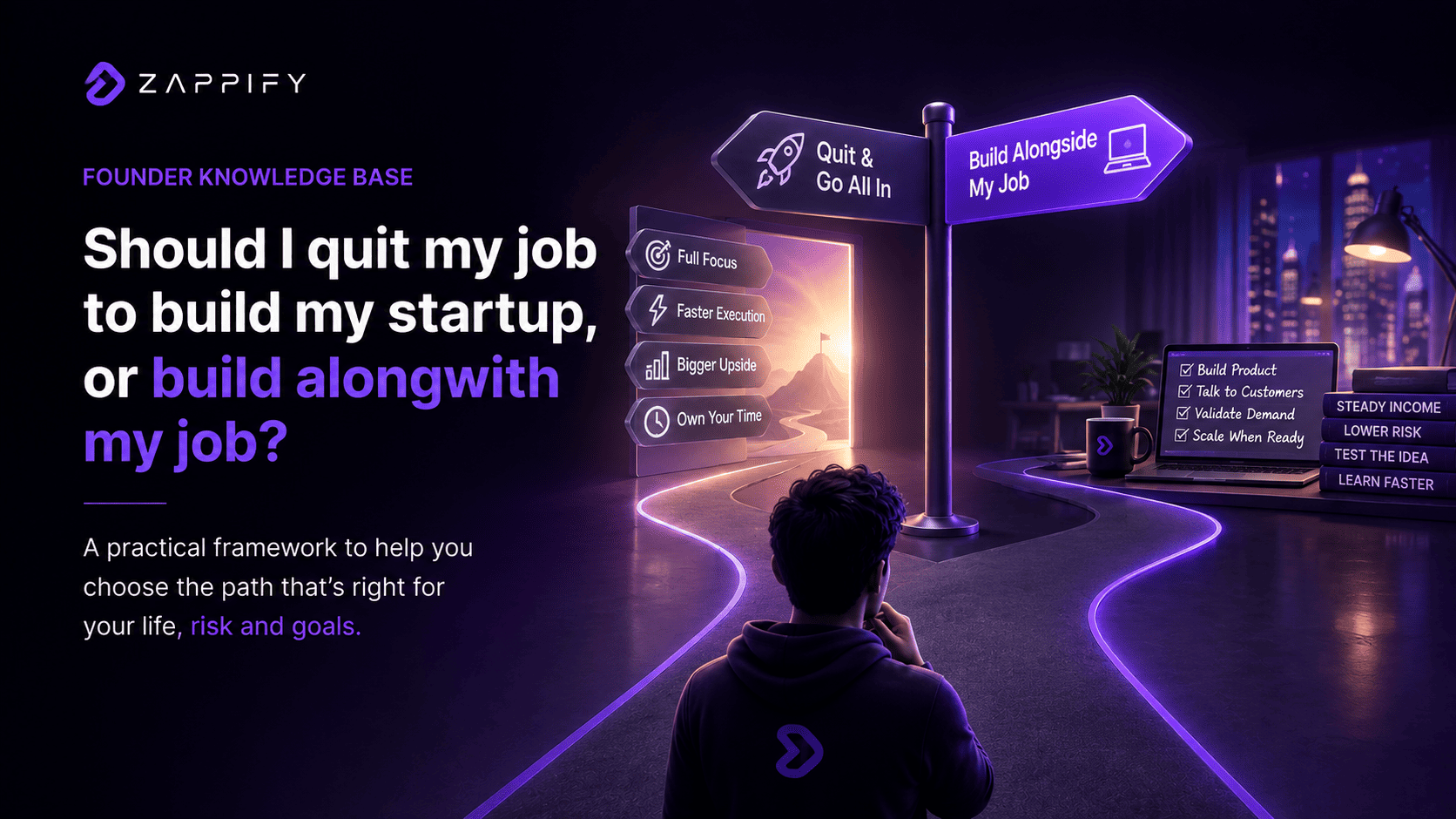
Short Answer I wouldn't quit my job just because I have a startup idea. I'd quit only when I knew two things. People actually wanted what I was building. And I had enough savings to give it a real shot. A startup is already hard. You don't need money stress making it even harder.
Why I think this? One thing I've noticed is that many first time founders think quitting their job is the moment they become "serious." I don't. Leaving your job doesn't increase your chances of success. It just increases the pressure. I've worked with founders who built amazing products while still working full time. They'd wake up early, work on the product before office, talk to customers in the evenings, and spend weekends improving it. Was it slow? Yes. Was it less risky? Absolutely. One founder we worked with is building ReferralMate . He's a real estate agent. That's still his main source of income. When he first came to us, he wasn't planning to quit and build a startup full time. He wanted to solve a problem he'd seen every single day while working in real estate. Today, ReferralMate has nearly 13,000 real estate agents on the platform. Even now, he hasn't left his real estate business. He's slowly shifting more and more of his time towards the startup because the business is proving itself. I think that's a much healthier way to do it. Instead of betting everything on an idea, he let the startup earn the right to become his full time job. The mistake I'd avoid is quitting because you're excited. Quit because you've reached a point where your startup genuinely needs all of your time. That's a very different decision. If I were starting from scratch... I'd keep my job. I'd spend the next few months talking to customers and building the smallest version of the product. If nobody used it, I'd still have a salary. If people loved it, I'd keep improving it. I'd only think about quitting when I reached a point where my job was slowing the business down, not because I wanted more time. I'd also make sure I had enough savings to live for at least six months without worrying about paying rent or buying groceries. I think founders make better decisions when they're solving customer problems, not money problems.
FAQs
Can I start a startup while working full time?
Yes, and I'd actually recommend it for most first time founders. Your job gives you something extremely useful in the early days, financial breathing room. Use your evenings and weekends to speak to customers, test the idea, and build the smallest version you can. You don't need to look like a full time founder before you have a business worth going full time for.
When should I quit my job to work on my startup full time?
I'd quit when your job becomes the thing holding back a business that is already showing real signs of life. If customers are paying, demand is growing, and you can see exactly what you'd do with the extra time, that's a different situation from simply wanting more time to work on an idea. The trigger should be evidence, not excitement.
How much money should I save before quitting my job to start a business?
I'd personally want at least six months of living expenses saved before making the jump. Your number may be higher if you have a family, debt, or large fixed expenses. The point isn't to create a perfect safety net. It's to remove enough money pressure that you can make good business decisions instead of taking the first paying opportunity you see.
How long should I work on my startup before quitting my job?
I wouldn't use a number of months as the rule. Six months of building something nobody wants is not progress. Three months with paying customers can be a much stronger signal. I'd use your time employed to learn whether people care, whether they'll pay, and whether the business is gaining momentum. Then decide whether your job is slowing that momentum down.
Can I build a startup on nights and weekends?
Yes, especially in the early stage. You don't need forty hours a week to find out whether people care about an idea. I'd use that limited time for customer conversations, sales, and the smallest useful version of the product. If you eventually reach a point where nights and weekends are clearly limiting growth, that's useful evidence that it may be time to go full time.