Which one would I choose today, Bubble vs Lovable vs Cursor?
I think founders spend too much time comparing tools. The better question is whether your technology will still help you ship new ideas a year from now.
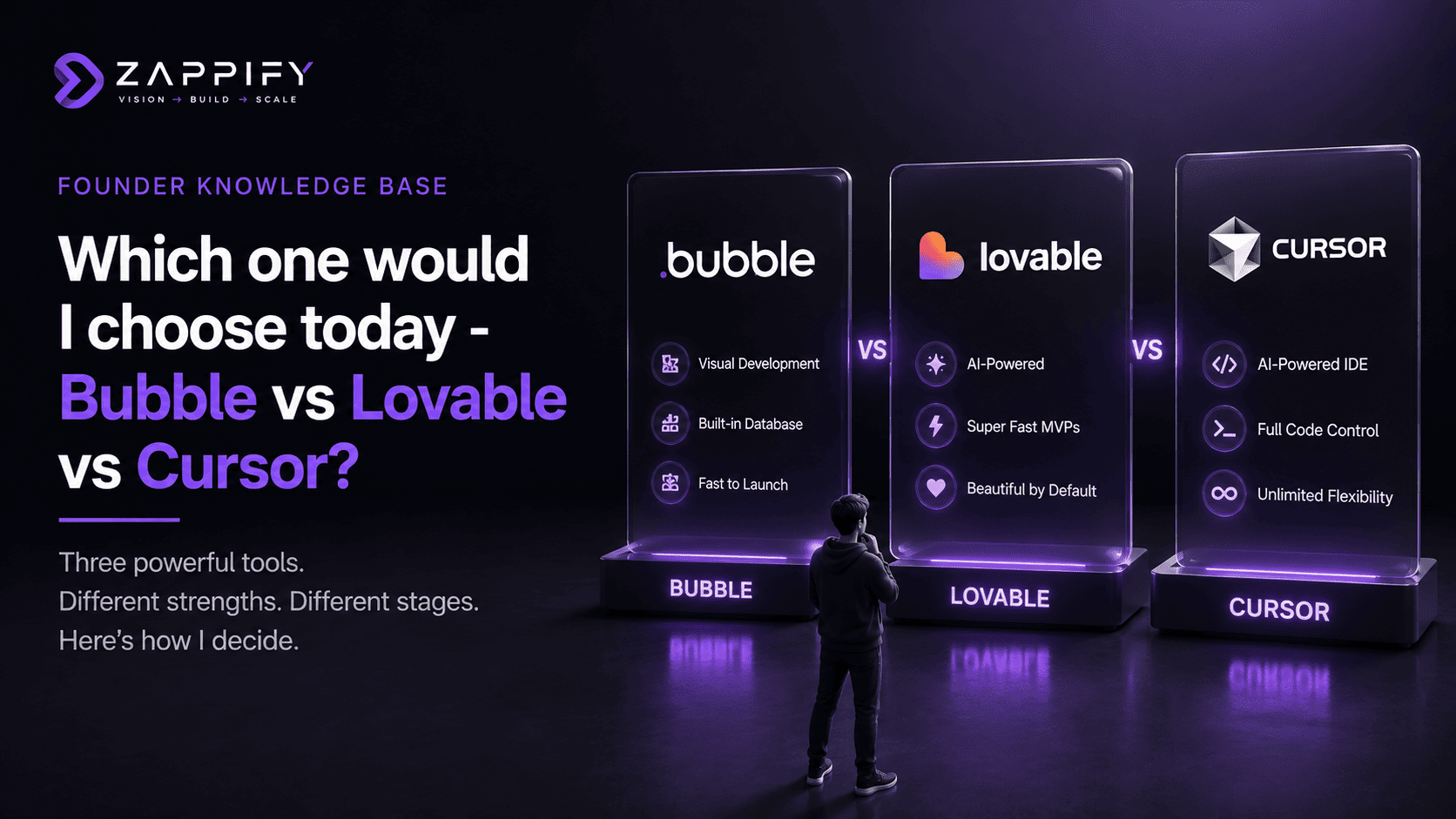
Short Answer Every week someone asks me, "Should I build this in Bubble, Lovable, or Cursor?" My answer is usually, "I don't know yet." Not because I don't have an opinion. Because technology isn't the first decision. The first decision is, "How do I want this business to run if it actually works?" Once you're clear on that, choosing the technology becomes much easier.
Why I Think This Five years ago, choosing a technology stack felt like a huge decision. Today, almost anyone can build software. AI has made that part much easier. The difficult part isn't building Version 1 anymore. It's improving Version 27. That's what I think founders should optimize for. One founder we worked with, Chris, had already built the first version of Epyic , an adventure marketplace in Australia. Another agency had built the product. But it wasn't ready for real users. We took over the same product. We didn't change the technology. We improved the foundation. We cleaned up workflows. We redesigned key parts of the experience. We fixed the structure underneath. Then we kept building alongside the business. For more than a year now, we've continued shipping new features almost every month. Today, Epyic has 100+ organisers and more than 6,000 live events. The biggest lesson wasn't that the technology needed changing. It was that the product needed to keep evolving as the business learned. I saw something similar with Doodl Space . They help businesses get unlimited graphic design through a monthly subscription instead of hiring designers themselves. Their customers expect fast turnaround, easy communication, and the flexibility to grow without adding more people. The software behind a business like that is never "finished." Plans change. Pricing changes. Workflows change. Customer requests change. When we worked with them, the important question wasn't, "What's the newest technology?" It was, "Can this platform keep evolving as the business evolves?" That's a completely different way of thinking. I've noticed founders often compare technologies like they're making a one time purchase. They're not. They're choosing something they'll have to live with for years. And that's where many people get it wrong. A Zappify Principle Don't optimize for how fast you can build. Optimize for how easy it is to keep improving. Your startup won't end after launch. Your first customer will ask for something. Then your second customer will ask for something else. Choose technology that makes those conversations exciting, not stressful. If I Were Starting From Scratch... I wouldn't open YouTube and watch ten comparison videos. I'd answer four questions first. Who's going to maintain this product? How often do I expect it to change? What happens if the person who built it disappears tomorrow? Will this technology help my business move faster, or will my business spend its time supporting the technology? Only after answering those questions would I choose Bubble, Lovable, Cursor, or something else. Because by then, I'd be choosing based on my business. Not based on what's trending this week.
FAQs
Can Lovable actually build a real startup?
Yes. Lovable can build a real product, not just a pretty demo. The bigger question is what happens after you launch it. Someone still needs to understand the product, fix things when they break, change the way it works, and keep adding features as customers ask for them. Building Version 1 is becoming easier. Knowing what to do with Version 2 is where things get interesting.
Can AI build my startup without a developer?
It can build a lot of the software, but I'd be careful about doing it if you don't understand code. The hard part isn't asking Cursor to create a feature. It's knowing whether what it created is actually the right way to build it, what will break later, and how to fix it when something goes wrong. You don't want to become the person maintaining a product you don't understand.
Is Bubble good enough for a startup that wants to grow?
Yes. Bubble can take a startup much further than just the MVP stage. I've seen products stay on Bubble for years, serve millions of users, and run profitable businesses without needing to move to custom code. The question isn't whether Bubble can scale forever. It's whether it can support the stage your business is actually at today. If it can, I'd keep building rather than rebuilding for a problem I don't have yet.
Should I use Bubble or Lovable if I'm not technical?
I'd lean towards Bubble if you want to stay closely involved in changing the product yourself. Lovable is great at turning instructions into working software quickly, but Bubble gives you a visual way to see the database, workflows, pages, and logic behind the product. That matters when you're going to spend the next year changing the product based on what customers tell you.
Should I build my MVP myself with AI?
You can, and I'd try it if you're technical or genuinely enjoy building. But I'd be careful if your real goal is to find customers. It is easy to spend weeks getting an AI tool to build something that looks impressive, only to discover that the product doesn't solve the right problem. Tools like Bubble can make this easier for non technical founders, but you still need someone thinking about the product itself.